About us2026-01-15T17:05:28+02:00

Company profile

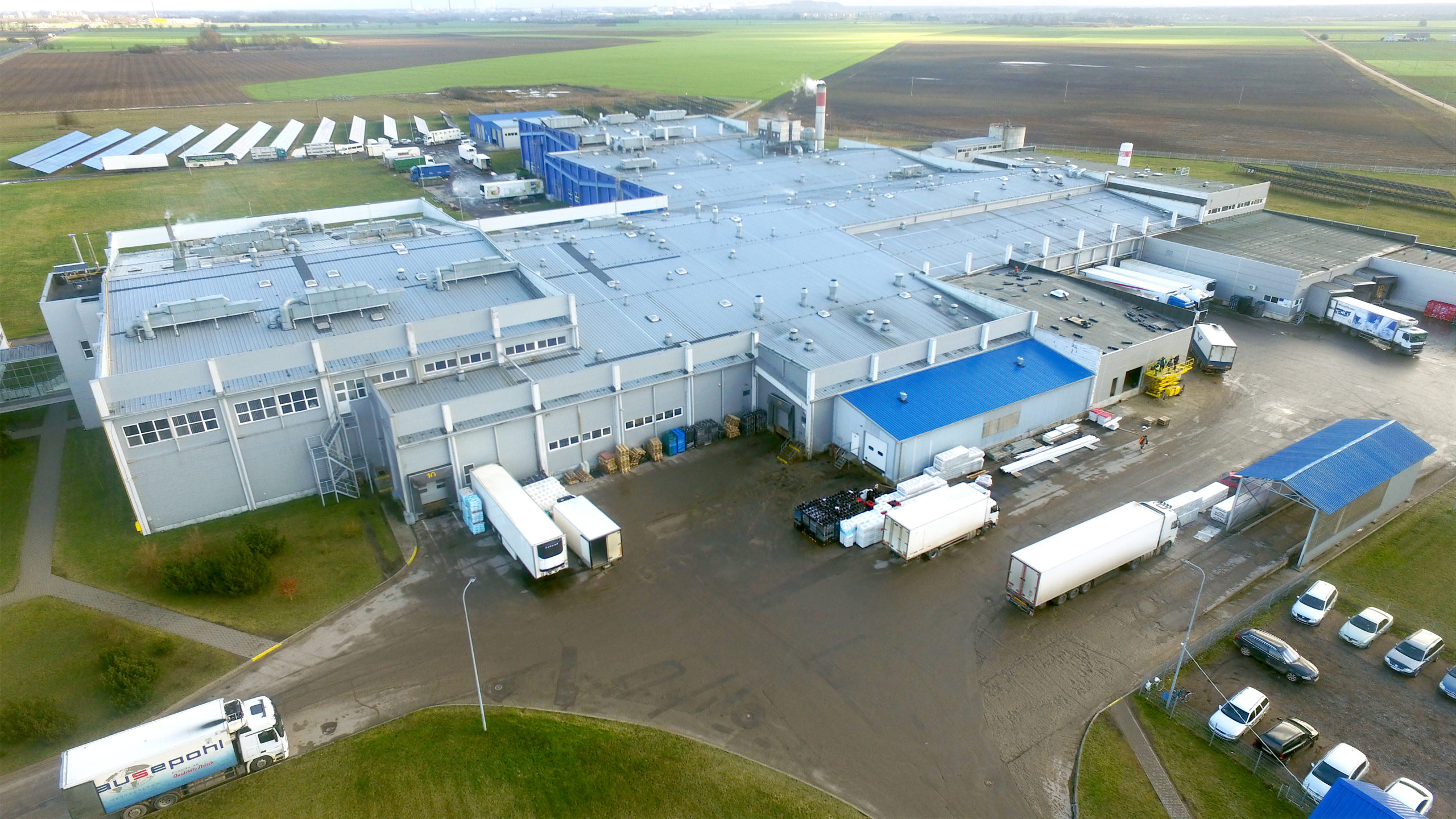
The history of UAB “Krekenavos agrofirma” spans more than three decades. In 1993, the pig farming complex established in the town of Krekenava was the largest in the country. At that time, a meat processing workshop was built, and the production of meat products began. Over the following decade, as demand for “Krekenavos” products grew significantly, a new facility became necessary as the old one could no longer keep up. Therefore, in 2004, following an investment of more than 23 million euros, a modern, entirely new meat processing plant was built in the Kėdainiai district. Under the roof of the company’s buildings, covering an area of more than 22,000 m², the largest pig and cattle slaughterhouse in Lithuania was established, along with meat cutting and packaging workshops and a thermally processed meat products production unit.

As the company began to focus more on the meat processing business, the “Krekenavos” pig farming complex was sold to the Danish company “Saerimner” in 2008. In the spring of 2009, a new extension was built at the processing plant near Kėdainiai, housing a modern fresh meat packaging workshop. An investment of more than 6 million euros increased the company’s competitiveness both in Lithuania and abroad. Today, we are an EU-standard meat processing company that is constantly growing, improving, and investing not only in new production technologies and equipment but also systematically developing the competencies of our employees. Since 2017, the annual turnover of UAB “Krekenavos agrofirma” has consistently exceeded 120 million euros.
Key Facts 

  • One of the largest meat processing companies in the Baltic States, with almost 30 years of experience.
  • More than 100 tonnes of fresh meat and almost 30 tonnes of meat products are sold every day (including all public holidays).
  • The company has a market share of ~30% in fresh meat and ~14% in meat products in Lithuania.
  • The company currently employs more than 1,000 employees.
  • All products are continuously checked in the quality department to ensure that only products that meet the highest standards reach the shelves of the stores.
  • The company’s technologists develop existing products and create new ones to continue to delight our consumers.

Export

  • ~30% of our total production is exported.
  • Every year, we export ~12,000 tons of fresh meat and nearly 2,000 tons of meat products.
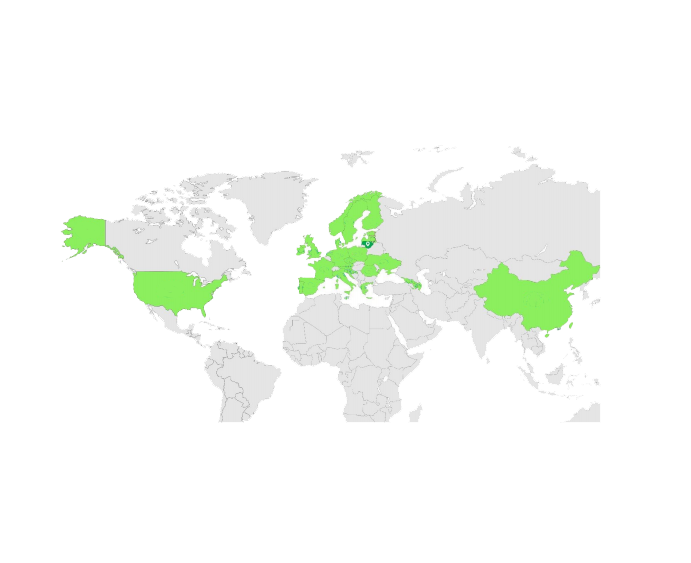
  • Our products reach as many as 32 countries worldwide.
Logo

Joint Project: “Installation of Private Electric Vehicle Charging Stations for Legal Entities at Workplaces”

Frequently Asked Questions

If a product is packaged using modified atmosphere technology, the label “Packaged in a protective atmosphere” is mandatory on the packaging. What exactly are these “protective gases” or the so-called “modified atmosphere”? It is actually very simple. The atmospheric air we breathe consists of a mixture of nitrogen (78%), oxygen (21%), and other gases like carbon dioxide and argon (1%).

Using specialized equipment, the air is completely extracted from the package and replaced with the same components—oxygen, nitrogen, and carbon dioxide—but in different proportions. For example, when packaging heat-treated products (such as cooked sausages), the nitrogen level is reduced, the carbon dioxide is increased, and no oxygen is added at all. Conversely, when packaging fresh meat, the proportion of oxygen is increased. A product packaged in this “protective atmosphere” stays fresh and fit for consumption longer because it has no contact with regular atmospheric air.

Only the highest quality, selected raw meat is used in the production of Highest grade (Premium) products. These meat products must not contain any mechanically separated meat (MSM), protein meat substitutes (such as soy, wheat protein concentrate, egg powder, milk powder), or fillers (potato or corn starch, semolina, wheat fiber). In other words, Highest grade products do not and cannot contain any meat substitutes or mechanically separated meat.

First grade products are permitted to contain up to 1–2% protein meat substitutes and up to 2–3% fillers (depending on the product group). Mechanically separated meat can also be used in First grade products, provided the aforementioned substitution limits are not exceeded.

Second grade meat products can contain up to 2% protein meat substitutes, while the amount of fillers (potato or corn starch, semolina, wheat fiber) is unlimited. However, for this grade, the composition must specify the exact percentage of these raw materials used.

Products labeled with terms such as “Extra,” “Panerio,” “Pieniška” (Milky), “Daktariška” (Doctor’s), “Premium,” “Puikus” (Excellent), “Lietuviškas” (Lithuanian), etc., must meet the quality indicators established for the Highest grade.

Protein meat substitutes are food materials in which proteins make up the majority of the functional components (e.g., soy protein isolate, wheat protein concentrate, egg powder, milk powder, etc.). In first and second-grade products, protein meat substitutes can be used to replace a portion of the meat without reducing the overall protein content of the meat product.

Fillers are food materials in which carbohydrates make up the majority of the functional components (e.g., corn starch, wheat flour, potato fiber, etc.). Fillers absorb water or fat and are most commonly used in the production of heat-treated minced meat products (such as second-grade cooked sausages and hot dogs).

Highest grade (Premium) meat products must be produced exclusively from raw meat, without the use of any plant or animal-based meat substitutes, food fillers, or mechanically separated meat.

It is very common to see “mechanically separated poultry” listed as the primary ingredient in second-grade products. What exactly is it? After poultry carcasses are deboned by hand, some edible meat remains on the bones. Using specialized technology, these bones with meat residues are crushed and passed through a specific sieve or filter—the bones and bone fragments are filtered out, while the meat material passes through.

The result is a meat mass with a purée-like consistency. This is “mechanically separated poultry,” which is also considered a raw meat material; however, its use is prohibited in highest-grade products due to its lower nutritional value. Manufacturers use this raw material for low-cost second-grade, and occasionally first-grade, meat products (mostly for second-grade cooked sausages and hot dogs).

That is untrue. Technologies that could replace the natural smoking process with any kind of “soaking” either do not exist at all or are unknown to Lithuanian meat processors. At UAB “Krekenavos agrofirma”, meat products are processed with natural smoke in smokehouses. The smoking process lasts as long as the specific product’s manufacturing technology requires. In our smokehouses, natural smoke is generated using natural beech or alder wood chips or wooden blocks.

Animal stunning is carried out using the most humane and modern methods, ensuring the animal does not even have time to feel pain. Cattle are stunned within a fraction of a second using a special pneumatic device. Pigs are put to sleep in specialized gas chambers. Furthermore, to ensure the animal does not experience stress and the meat remains healthy, pigs are placed under a warm shower before slaughter, where they can calm down and rest. Cattle are simply left to stand quietly and rest in holding pens.
That is untrue. Let’s take any highest-grade (Premium) cooked hot dogs as an example. Depending on the recipe, the pure raw meat content can be around 75%, with the remainder consisting of water and spices. If we look at cured (dried) sausages, even more meat is used in their production than is ultimately sold, as meat loses moisture during the curing process and becomes lighter. For example, to produce 100g of cured sausage, 140–150g of meat is used.

In first or second-grade products, raw meat also makes up a significant portion—about 65% (the rest consists of meat substitutes, fillers, water, and spices). However, these products often utilize more affordable raw meat, known as mechanically separated meat (MSM). How is it made? After manual deboning, some muscle and tissue suitable for consumption remain on the bones. Modern technologies developed abroad are capable of separating these meat residues from the bones: everything is crushed and passed through a special sieve/filter, resulting in a homogeneous meat mass fit for food.

While mechanically separated meat differs little from pure meat in terms of flavor, it is significantly cheaper. Due to its lower nutritional value, it cannot be used in highest-grade products. Therefore, those who wish to consume the highest quality and most nutritious products—free from meat substitutes, fillers, or mechanically separated meat—should choose products labeled as “Highest grade” (Aukščiausia rūšis).

No. Production using paper is not even possible, primarily because paper is both inedible and an expensive raw material. Using paper in sausage production is an old and quite ridiculous myth. In low-cost first and second-grade meat products, mechanically separated meat is used as an affordable raw meat material. It is a very inexpensive and nutritious ingredient.

At UAB “Krekenavos agrofirma”, we do not use any additives marked with E-numbers in the production of our “Produced without preservatives” line. However, even without adding E-additives, trace amounts of nitrites and monosodium glutamate (MSG) can sometimes be detected in the final meat product during testing. How do they get there if we didn’t add them?

Monosodium glutamate is a natural component of meat’s chemical composition. If you cook any steak at home, it will naturally contain a small amount of this substance, even though you didn’t add it. Therefore, it is natural to find traces of it in our E-additive-free products as well.

A similar situation occurs with nitrites. We use natural spice and vegetable extracts in our production. Vegetables naturally accumulate nitrates, which then break down into nitrites. This is a completely natural, everyday process that we don’t even think about when eating vegetables. Thus, a very small amount of nitrite may be detected in the final product, even though it was not added as an ingredient.

AN INTERESTING EXPERIMENT: Take a piece of fresh pork and sprinkle it with natural herbs: marjoram, parsley, and celery. Let it marinate for about 24 hours and bake it the next day. When you cut into the roast, what do you see? The edges of the meat have turned pink. This is the effect of nitrites naturally formed from the herbs. It creates this color by reacting with the myoglobin present in the meat. As you can see, we encounter substances every day that occur naturally in our lives but would carry an “E” designation if they were in their pure, isolated form. We just don’t think about it—after all, we are eating natural food. In fact, even an apple contains about 10 substances that would be marked with an E-number if purified. But if you bake a pie using only apples, you could call it “E-additive-free,” couldn’t you? We believe so. What do you think now?

We cannot speak for all manufacturers; however, you will always find accurate information on the labels of UAB “Krekenavos agrofirma” products. The company has implemented a self-control system, where internal audits verify production processes, raw materials, and recipes. We perform traceability checks and identify the raw materials listed in the product’s ingredients on the label.

Furthermore, the regional State Food and Veterinary Service periodically inspects our product compositions and technological processes. At any time, it is possible to trace which raw materials were actually used to produce a specific batch of sausages and compare that data with the information provided on the label. We constantly make labeling adjustments based on feedback to ensure consumers are correctly informed about the product’s composition, grade, and other important characteristics.

Currently, there is a prevailing opinion that manufacturers do not bother to tell the truth on labels (writing one thing while adding whatever they want); unfortunately, the manufacturers who suffer most from this perception are those who honestly provide all the necessary information.

In the Media